In the corporate world, there is a pervasive paradox: organizations frequently invest significant capital and…
How to Calculate the ROI of ISO 9001 Certification
Posted by Oscar Combs in Blog, Home Page
20
Mar
2026
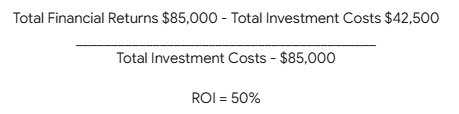
For many organizations, achieving ISO 9001 certification is a huge accomplishment—a globally recognized standard that proves a commitment to quality management and continuous improvement. But when it comes time to secure buy-in from Leadership, “commitment to quality” rarely cuts it alone. Leadership want to see the numbers. They want to know the Return on Investment (ROI). Calculating the ROI of ISO 9001 certification involves quantifying both the upfront and ongoing costs against the financial benefits of improved efficiency, reduced waste, and increased market access. Here is a comprehensive guide on how to measure the true financial impact of your quality management system (QMS). To calculate an accurate ROI, you must first capture the total cost of ownership for achieving and maintaining the certification. Costs generally fall into two categories: initial implementation and ongoing maintenance. ……• External Consulting: Fees for hiring ISO experts or consultants to conduct gap analyses and help build your QMS. The benefits of ISO 9001 are often both operational and commercial. While some are immediate, others compound over time. To calculate ROI, you need to assign a dollar value to these improvements. Once you have gathered your total costs and your total financial returns for a given period (usually measured over 1 to 3 years post-certification), you can use the standard ROI formula. Let’s imagine a mid-sized manufacturing company evaluating its first year of ISO 9001 The Costs: ……• Consultant Fees: $12,500 ……• Certification 3yr Fees: $10,000 ……• Employee Time (Implementation & Training): $20,000 ……• Total Investment: $42,500 ……• Profit from a new government contract requiring ISO 9001: $60,000 ……• Savings from a 15% reduction in material waste: $15,000 ……• Savings from reduced customer returns: $10,000 ……• Total Return: $85,000 In this scenario, the company not only recovered its initial investment but also generated a 50% return in the first year alone. The company can expect an annual residual ROI for years to come. Not every benefit fits neatly into a spreadsheet. When presenting your ROI findings, it is crucial to highlight the qualitative, intangible benefits that ISO 9001 brings to an organization: Oscar Combs is the President of The ISO 9001 Group, a consulting, auditing and training company headquartered in Houston, Texas. With over 31 years of experience in the field, he is recognized as an expert in the implementation of management systems that help organizations manage risk and improve operational efficiency. The ISO 9001 Group is a business and management systems consulting, auditing and training firm headquartered in Houston, Texas with regional resources in Atlanta, Chicago, Denver, New York, and Portland. Contact us at info@iso9001group.com for more information or www.iso9001group.com.
1. Identifying the Costs (The Investment)
Initial Implementation Costs:
……• Certification Body Fees: The cost of the Stage 1 and Stage 2 audits conducted by an accredited certification body, such ISO Certifications Group, an accredited certification body based in Houston, Texas.
……• Employee Time: The internal labor costs for the QMS implementation team, including time spent writing procedures, training, and preparing for audits.
……• Technology and Tools: QMS software, document control systems, or new equipment required to meet the standard.
Ongoing Maintenance Costs:
……• Surveillance Audits: Annual fees paid to the certification body to maintain your status.
……• Internal Auditing: The cost of employee time dedicated to conducting required internal audits.
……• Continuous Improvement: Resources dedicated to corrective actions, management reviews, and system updates.
Tip: Do not overlook the cost of employee time. While it isn’t an out-of-pocket cash expense like an auditor’s invoice, allocating labor hours to ISO implementation is a real operational cost.
2. Quantifying the Benefits (The Return)
Revenue Generation:
……• New Contracts: Many large corporations and government entities require suppliers to be ISO 9001 certified. Calculate the profit margins of contracts you won because you had the certification (or contracts you would have lost without it).
……• Increased Market Share: A certified QMS can be a powerful marketing tool that builds customer trust and accelerates sales cycles.
Cost Savings (Operational Efficiencies):
……• Reduced Scrap and Rework: Better process controls mean fewer mistakes. Track the reduction in wasted materials and the labor hours previously spent fixing errors.
……• Lower Warranty Claims and Returns: Higher quality outputs lead to fewer customer complaints, returns, and warranty payouts.
……• Process Efficiency: Streamlined workflows reduce the time it takes to deliver a product or service.
3. The ROI Calculation

A Practical Example
The Returns (Year 1):
The Calculation:
4. Factoring in the Intangibles
……• Enhanced Brand Reputation: Being associated with a globally recognized standard elevates your brand’s perception.
……• Employee Morale and Ownership: Clearer processes and defined roles often lead to less workplace frustration and higher employee engagement.
……• Risk Mitigation: A robust QMS helps identify and mitigate risks before they turn into costly crises.
……• Better Decision Making: ISO 9001’s emphasis on evidence-based QMS allows leadership to make strategic decisions backed by data rather than guesswork.
The Bottom Line
Treating ISO 9001 merely as a compliance exercise or a marketing sticker will likely result in a poor QMS and a low ROI. However, when an organization genuinely embraces QMS principles to optimize processes, reduce waste, and capture new market share, the financial returns almost always dwarf the initial investment. By rigorously tracking your costs and quantifying your savings, you can prove that quality doesn’t just cost money—it pays.
About The Author
The ISO 9001 Group
Contact Us Today